

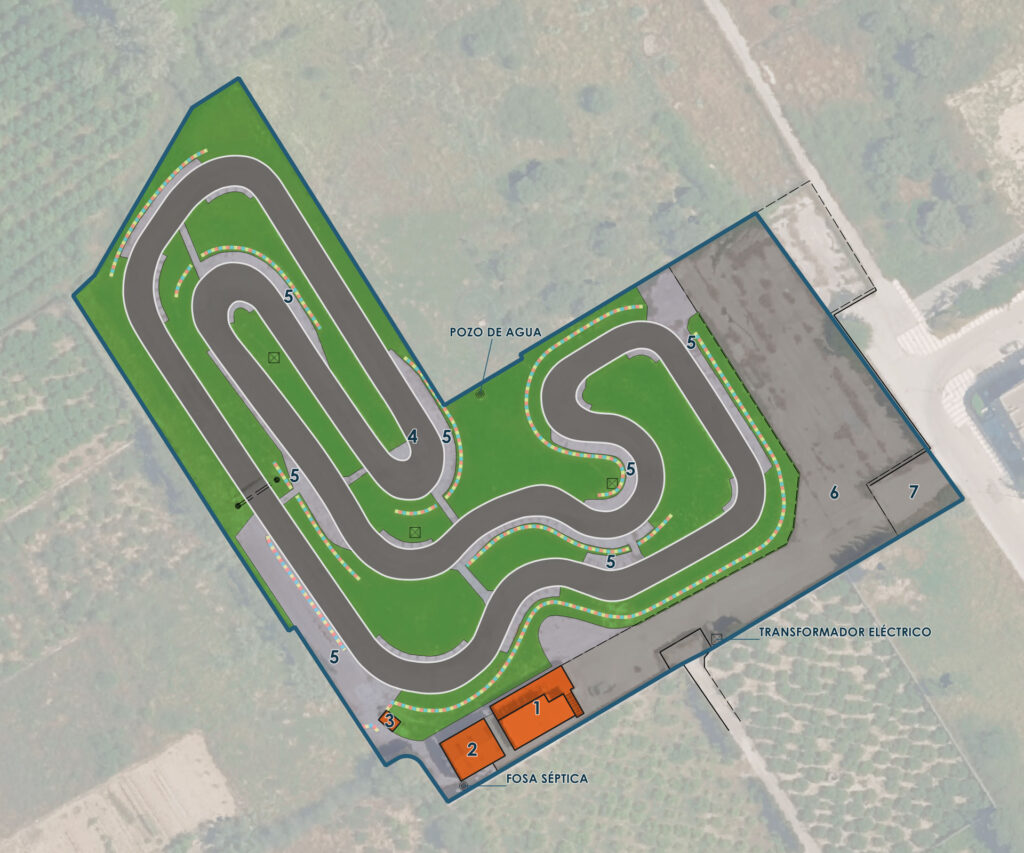
Valencian urban planning legislation provides for the mechanism known as “Declarations of Community Interest” (Declaraciones de Interés Comunitario). Through this instrument—provided that specific requirements are met—it is possible to obtain a special regional authorization that allows, on an exceptional basis, for the establishment of industrial, tertiary, productive, or service-related activities on non-urbanizable land. This is a mandatory procedure that must precede any municipal license; its practical value lies in its ability to stimulate the economy in many areas where maintaining business activity would otherwise be extremely difficult.
For many years, AUG-ARQUITECTOS, SLP has focused closely on these types of projects, given their significance to clients who entrust the firm with a vital aspect of their business: securing the urban planning authorizations that pave the way for obtaining the various other licenses, permits, and approvals required to conduct business legally. In this sense, Declarations of Community Interest serve as the key to ultimately securing the value of the investment made.
Over the past thirty years, the firm has prepared the necessary technical documentation for a wide range of activities—from slaughterhouses and rural tourism facilities to go-kart tracks, carpentry shops, and various other workshops. Behind each of these ventures are individuals whose hard work and dedication help sustain the economic life of small municipalities. Every project presents a unique challenge for the AUG-ARQUITECTOS, SLP team, as it often requires delving into a specific sector of economic activity that may initially be entirely unfamiliar—a field that must be thoroughly understood in order to accurately apply the relevant technical regulations.
All Declarations of Community Interest prepared by AUG-ARQUITECTOS, SLP have been approved; two additional applications are currently being processed.
The firm has prepared both standard and regularization-focused “Declarations of Community Interest” (DICs), as well as applications for extensions (following the expiration of the initial thirty-year term). It has also handled cases within the “Rural System”—a framework where the formal DIC designation does not exist, yet an analogous procedure is required. This process demands an even greater level of involvement and advisory support for the various stakeholders participating in the promotion and processing of such applications.